
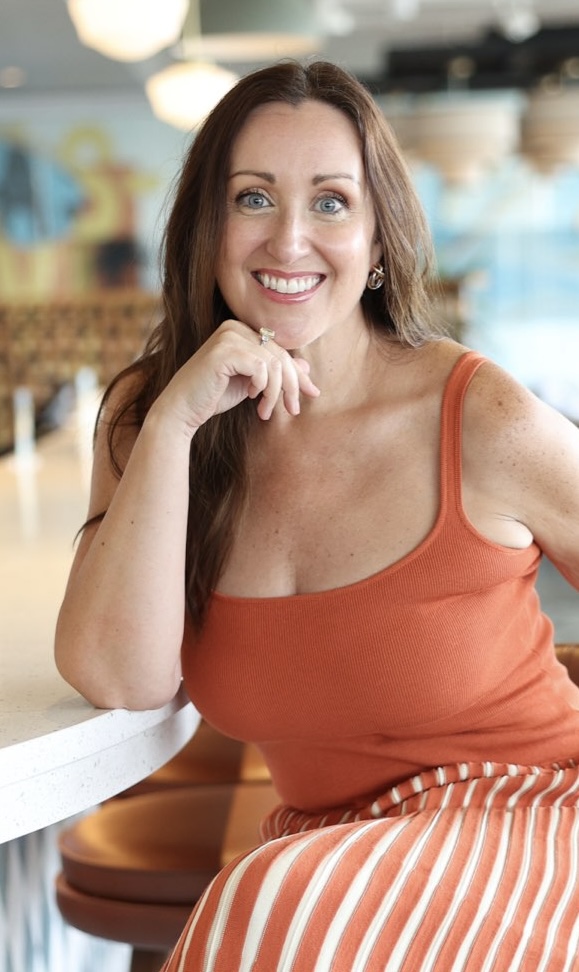
Sara Sweat, MA – Founder, Monarch
You were the one who couldn’t pretend that what was harmful was normal.
You’re the one who went to therapy first.
Who read the books.
Who learned the language of boundaries and nervous system regulation while everyone else kept telling the same old stories.
And, even though you’ve taken on a job no one asked you to do – you couldn’t not do it.
You’re trying to heal what you were handed, so the people who come after you don’t have to.
And, you do it really well. But, you’re really freaking tired.
When you’re the first to heal
You’re lying awake at 2:23 a.m. (again) doing the math on everyone’s needs and realizing there is no version of the day where you can meet them all.
This is problematic because life has taught you that you’re the one who has to do it all.
- “It’s always all on me.”
- “No one else is going to handle this.”
- “If I don’t step up, everything falls apart.”
You’re simultaneously the black sheep at the extended family table and the project manager for the entire event.
You noticed the drinking.
The side eye.
The secrets.
The way love got tangled up with achievement, or with silence, or with pretending.
The canary in the coal mine, gasping and flapping, while everyone around you fails to notice the toxicity rising in the room.
And at some point, you had a realization:
The cost of doing my personal work is less than the cost of doing this for the rest of my life.
So you started to change. You started to heal. You stopped going along with things that were wrong just because they were familiar.
And, you did it.
The cost? This loneliness that just keeps getting louder.
The loneliness that never lifts
On paper, you’re surrounded by people.
There are kids asking what’s for dinner.
Parents who need their doctor’s appointments coordinated and paperwork filled out.
Colleagues pinging you with “quick questions” at all hours of the day and night.
Siblings who only call when there’s a crisis.
You are rarely alone.
The loneliness you feel isn’t about how many people are around you. It’s about how few people actually see you.
It happens when you’re cleaning up after a family gathering you planned, paid for, and executed—while everyone else is already scrolling on the couch.
It creeps in when you’re reaching out to friends, doing calendar gymnastics to coordinate your next get together while everyone else just keeps throwing up barriers to getting something on the books.
You feel it when you’re reworking that work project for the third time because your “partner” keeps coming up with excuses for why they can’t get anything done.
You live in a world where you are responsible for everyone else…and there is no one responsible for you.
You have learned how to hold it all.
You have never known what it feels like to be held.
This is what it’s like to be the first one to heal. This is what it feels like to go it all alone. To be a cycle breaker – a strong one – a default adult.
You feel like you’re broken instead of being the one breaking patterns. And, it feels like you’re really, really alone.
But, as someone who has been doing this for a very long time, one thing I know for sure – you most definitely are not.
So, if you’re going to continue to be the strong one – which, let’s be honest, isn’t like a choice anymore – there are four things I’ve learned that can really help.
Stop doing it all in the dark
You have spent a lifetime being the one who just handles it.
That strategy was necessary. It protected people – maybe even you. But, it has also kept you invisible.
If you want this season to be different, you cannot keep trying to break patterns in isolation.
That doesn’t mean you sit your whole family down for a TED Talk about what’s wrong with them. (Though I would totally bring the popcorn if you wanted to try). It means you stop doing it all alone.
- Instead of staying up until 1 a.m. to make everything perfect for a family event, you invest your time in the things that matter to you and assign out the tasks that matter to everyone else.
- Instead of absorbing every crisis as if it is your own, you start saying sentences like: “I love you, and I can’t solve this one for you. Here’s what I can do.”
You don’t owe anyone a full explanation of your healing, and they probably wouldn’t listen if you tried, but you do deserve to stop pretending it doesn’t cost you anything.
You are allowed to say, “This is hard for me.”
You are allowed to say, “I can’t keep doing this.”
Redraw the lines between love and responsibility
A lot of your exhaustion lives in one old belief:
“Loving people means I am responsible for their feelings, their choices, and their outcomes.”
That belief may have made sense in the family you grew up in. Or the company you worked at for years. It might have kept things manageable or calm, or predictable enough that you could get through them.
But now it’s burning you out.
You are allowed to redefine love as:
- “I care about you deeply and I won’t rescue you from the results of your own choices.”
- “I will show up as well as I can without disregarding myself.”
- “An inability to plan on your part does not constitute an emergency on mine.”
It will feel, at first, like you’re abandoning people. Like you’re a cruel, heartless, troll who hates the world and never cared about anyone.
Newsflash: you’re not. You’re just finally stepping out of a role you were never meant to play: parent to your parents, fixer of adults, human emotional barometer, jackass whisperer.
You can love your family without being the glue that keeps them from falling apart.
Let some things fall
This might be the hardest part.
If you stop over-functioning, some of the things you have been doing will drop.
The holiday might not look as picture-perfect.
The group text might get quieter when you stop initiating.
A family member might show up late, unprepared, or not at all—because you’re no longer doing their part for them.
You will be tempted to jump back in, to catch all the falling pieces and be “the responsible one” yet again.
Here’s what I need you to remember when it all hits the fan: some of what is falling is supposed to fall.
You are allowed to let other adults experience the weight of their own lives.
You are allowed to let your absence reveal how much work you’ve been doing.
You are allowed to be responsible for only that which is yours.
This is where your identity starts to shift—from “the one who prevents every disaster” to “the one who prevents their own collapse.”
Find people who speak your language
As much as you might wish it so, the loneliness you feel won’t go away because your family suddenly gets it.
That lightning bolt moment you’ve been waiting for when they finally see you for all your bravery and dedication and strength is – like the scene from A Christmas Story when Ralphie’s parents are bereft that they caused his blindness by washing his mouth out with soap – a dream.
The loneliness ends when you stop trying to convince the people around you to understand and find the people who already do.
You are not meant to white-knuckle your way through this life in isolation.
You need places where you don’t have to explain why Thanksgiving is a nightmare. Where people already understand what it takes to set a boundary at 50 that you should have been taught at 5. People you can roll your eyes with and text when Uncle Bob pops the top on his 7th beer of the night.
You are not a self-help project. You don’t need another list of things to fix about yourself. You need a place that doesn’t need anything from you – where you can just show up and be fully understood.
Meet Monarch
Monarch is that place.
Monarch is a sanctuary for the strong—the first-to-heal, cycle-breaking, default-adults – who have been keeping everything running and are running themselves ragged in the process.
Here, you don’t have to be the strongest person in the room. In fact, we assume you already are. So, we created a place where you can set that strength down.
In our community, you’ll find:
- People who can reflect back all the ways you’re doing this right, instead of all the ways you feel like you’re failing.
- Shared language and strategies for navigating your new life; holidays, hard conversations, and “you’ve changed” comments without smacking people upside the head.
- A community where you’re not the antagonist for wanting something healthier; you’re the hero for making it possible.
You have spent a long time being strong alone. That ends now. Being the first to heal will always be brave work. Hard work. Frustrating work, even.
But, it doesn’t have to be lonely.
Monarch is where the strongest people go to take a break from holding everything together. We offer coaching and community for the people no one else even thinks to check on. If this resonated with you, subscribe for free weekly advice. Or, register to join our monthly virtual calls.